
GENERAL MAPLE FACTS
*What is a sugarbush? It is a grove of sugar maple trees.
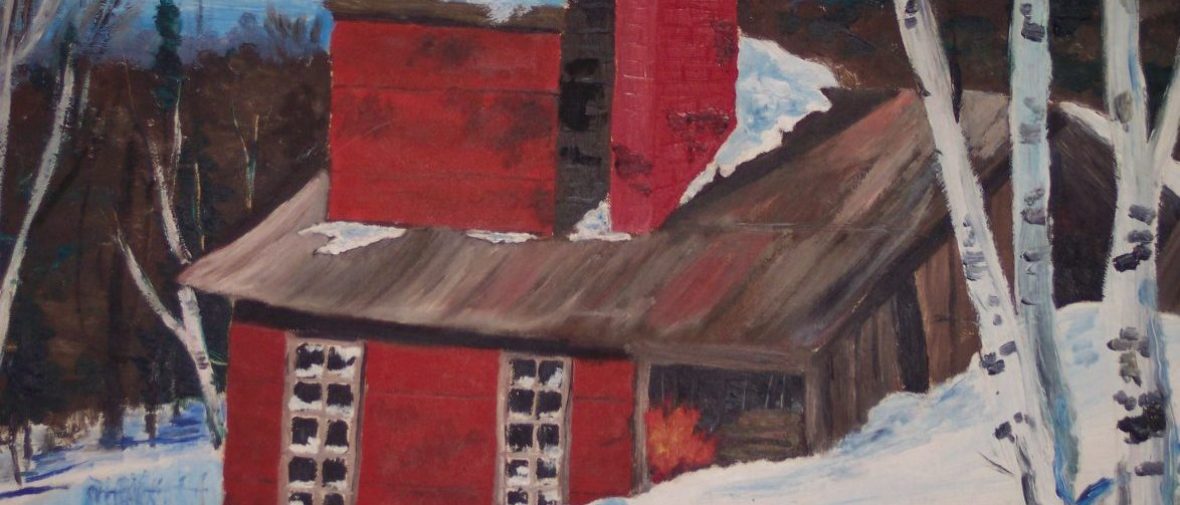
*What is a sugarhouse? It is the building where sap is heated to make maple syrup.
*What is maple sugaring? Maple Sugaring is another term used to describe the process of making maple syrup. That is, boiling maple sap, which evaporates the water molecules leaving a more concentrated sugar-rich liquid: syrup.
*What is sap? Sap is a clear liquid, water-like but it contains about 2% sugar. Sap flow is caused by pressure difference within the tree when the temperature fluctuates. Nighttime temperatures below freezing and daytime temperatures above freezing create pressure conditions ideal for sap flow.
*What is tapping? Tapping is simply the act of drilling a small hole into a maple tree each spring.
*What is sugar-on-snow? Also known as “Jack Wax”. Maple syrup is heated to about 230 and poured over snow or shaved ice, resulting in a chewy taffy-like confection.
*It takes about 40 gallons of sap to make one gallon of maple syrup.
*Native Americans are credited with discovering and producing maple syrup.
*Maple trees in most of New York State are tapped in February or March. Trees will have 1, 2, or 3 taps depending on the size of the tree. A hole is drilled into the tree to allow sap to flow out. A spile or spout is put in the tap hole. Spiles have buckets or plastic tubing attached to them to collect the sap. Sap is either collected by pouring it from the buckets into a collection tank or channeled through tubing into large tanks before it is produced in the sugar house. Trees are not damaged by tapping.
*Turning sap into syrup involves evaporation. Water must be removed to produce a more concentrated sugar solution. During evaporation, sap is concentrated to the desired sugar content and the distinctive maple color and flavor also develop. Initially, syrup was produced by boiling sap in an iron kettle over an open fire. In the 1850s, the use of evaporators became common.
*Maple syrup is boiled even further to produce maple cream and maple candy.
*Some maple producers use vacuum pumps to create negative pressure in their collection systems. Using vacuum dramatically increases the amount of sap production.
CAMPBELL MAPLE FACTS
*There is 2500 feet of mainline tubing buried from the top of the hill where the sugarbush is to the sugarhouse which carries the sap from the trees to the holding tanks. Currently we have about 12, 500 feet of sap collection plastic tubing. We have 3300 taps.
*All the plastic tubing is left in the woods. New holes are tapped each year.
*Squirrels and maybe a bear have chewed lines.
*We use Reverse Osmosis (RO) which takes water from the sap leaving about a 4% concentrate. It reduces the time needed to boil the sap into maple syrup. The resulting concentrate is boiled using a wood fired evaporator.
GRADES OF MAPLE SYRUP
Maple grades in New York State are classified by color:
- Golden: Delicate Taste. Pale, golden color and mild maple flavor.
- Amber: Rich Taste. Tawny amber color and rich maple flavor.
- Dark: Robust Taste. Dark bronze color and full bodied maple flavor.
- Very Dark: Strong Taste. Very dark brown color and strong maple flavor. It is most often used for cooking.
These grades were previously known as Light, Medium and Dark.
 Campbell Maple